Designing a football fan experience
A seasonal product that turned matchday engagement into repeat participation.
Product Design
UX Design
Gamification
Overview
Building stronger fan connections
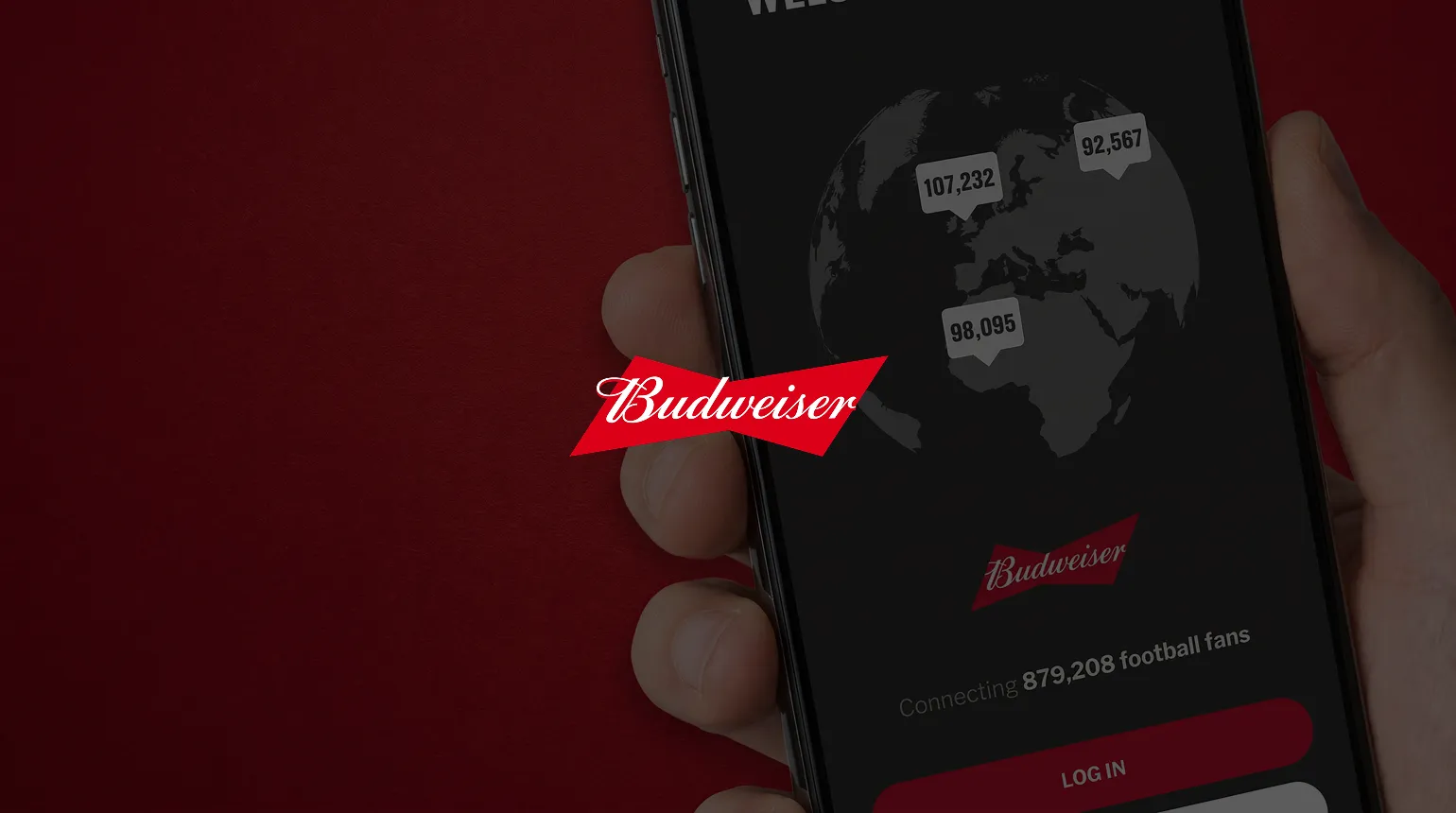
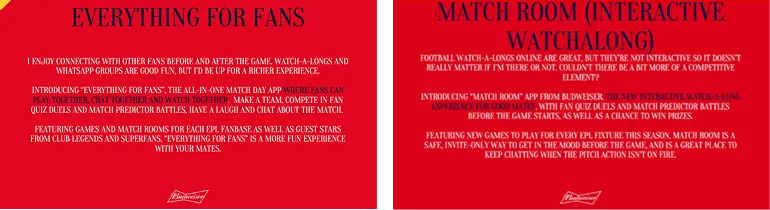
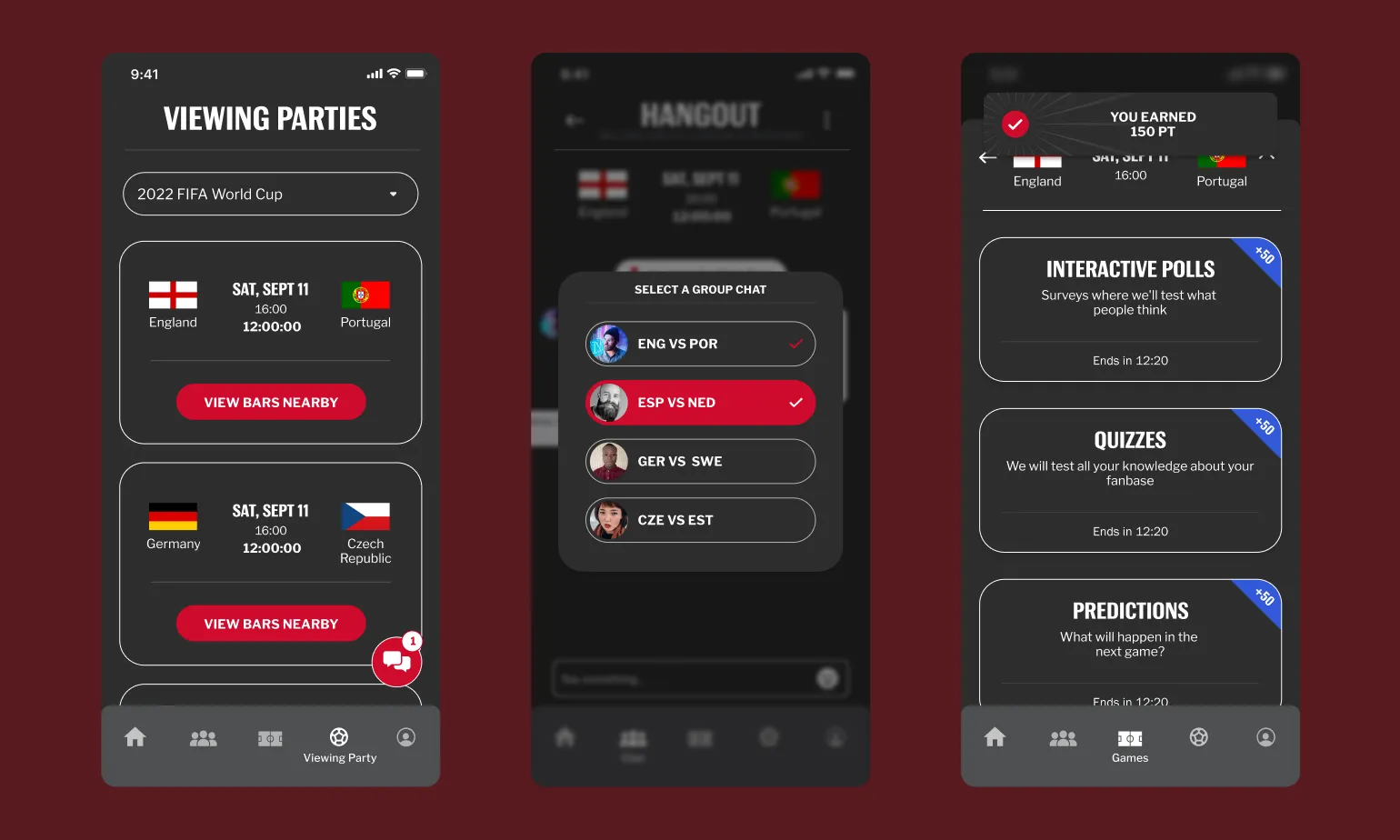
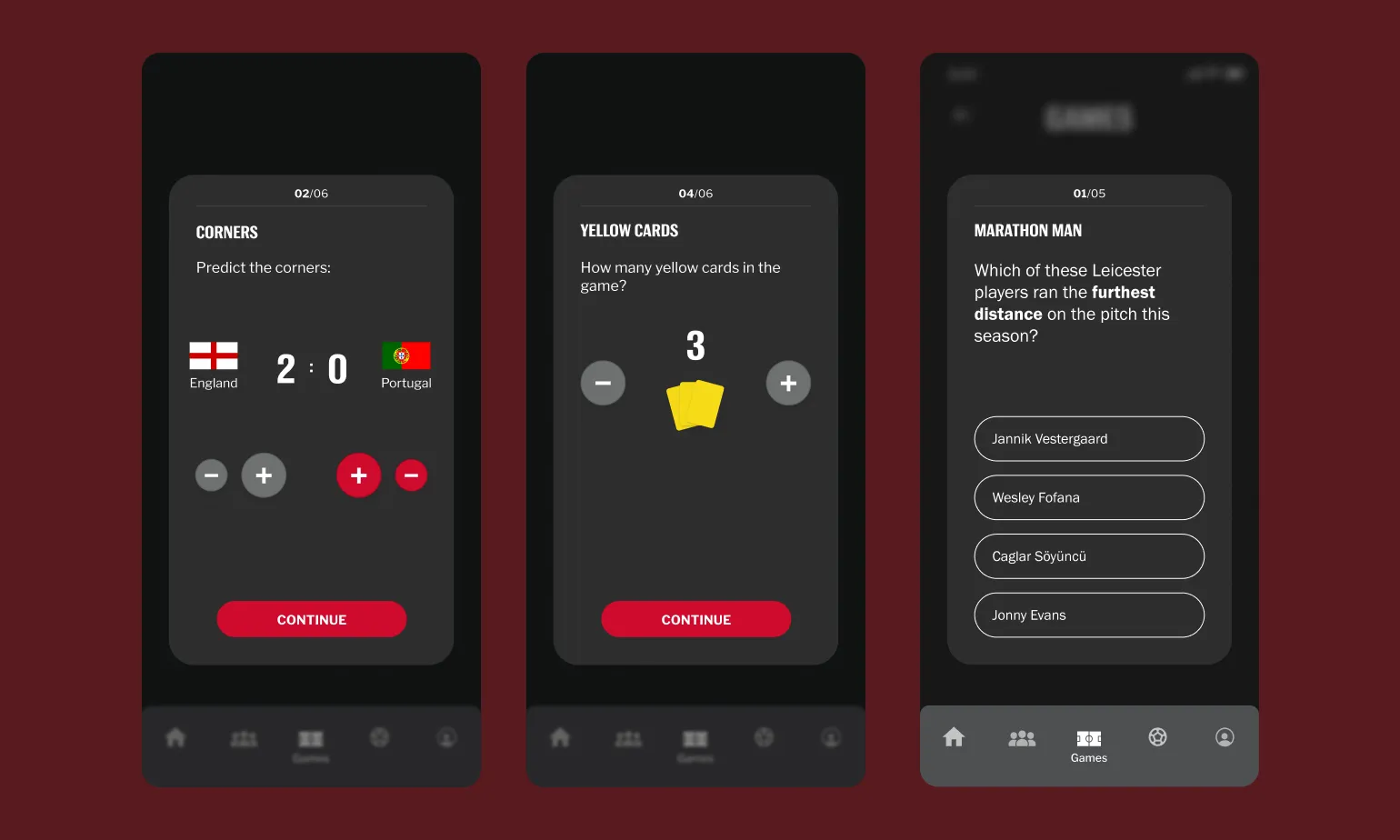
Budweiser wanted to strengthen its connection with UK football fans through more than content: a digital experience that felt like "being part of the team." The result was a gamified app where people could choose a team, play mini-games, earn points, and compete for brand-defined prizes, alongside social features such as chat and watch parties in bars and restaurants during matches.
In the UK, football brings people together, creates communities, and strengthens friendships around a shared passion. Abi saw an opportunity to take that connection further, turning following the sport into a more participatory and rewarding experience.
Problem
The challenge was not to make a "fun app," but to design a system that could sustain engagement throughout the season:
- How might we turn fandom, emotion, rivalry, and match-day rituals into repeatable game mechanics?
- How might we encourage people to return without making the experience feel repetitive or purely "promotional"?
- How might we connect digital and real-world watch parties without fragmenting the experience?
- How might we make points and prizes clear, fair, and motivating?
Research
To reduce uncertainty, I ran research focused on testing hypotheses and understanding real motivations:
- User profiling, needs, and pain points with stakeholders to define who we were designing for and the app's "job": compete, demonstrate knowledge, belong, and win.
- Validation of two core questions: 1) Which mini-game formats are most compelling for football fans? 2) How can healthy competition drive consistent participation?
- A review of gamification and sports experiences to identify patterns in progression, rewards, live challenges, and social dynamics.
Design Decisions
Based on those findings, I made product and UX decisions that supported clarity, motivation, and scale:
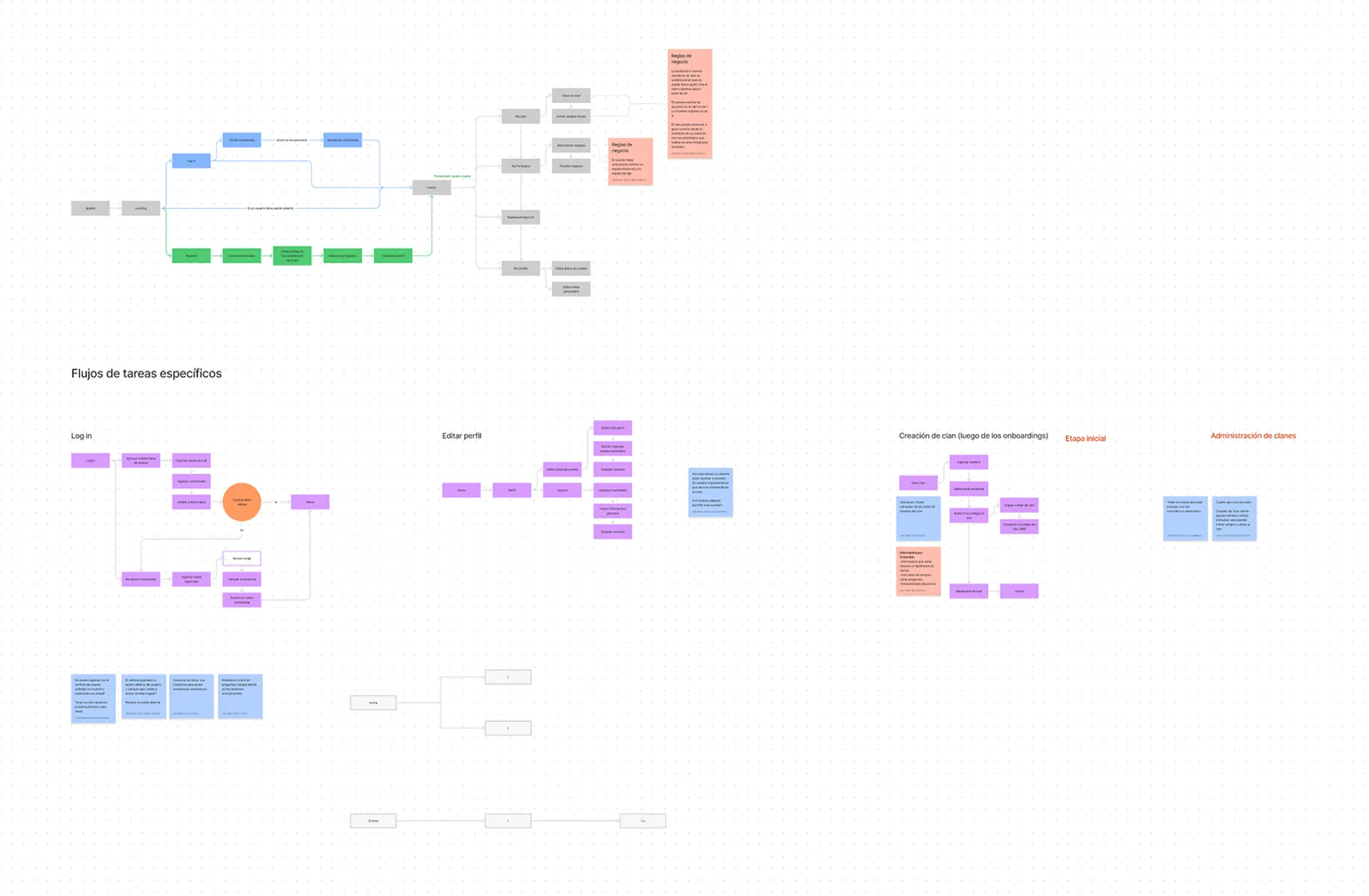
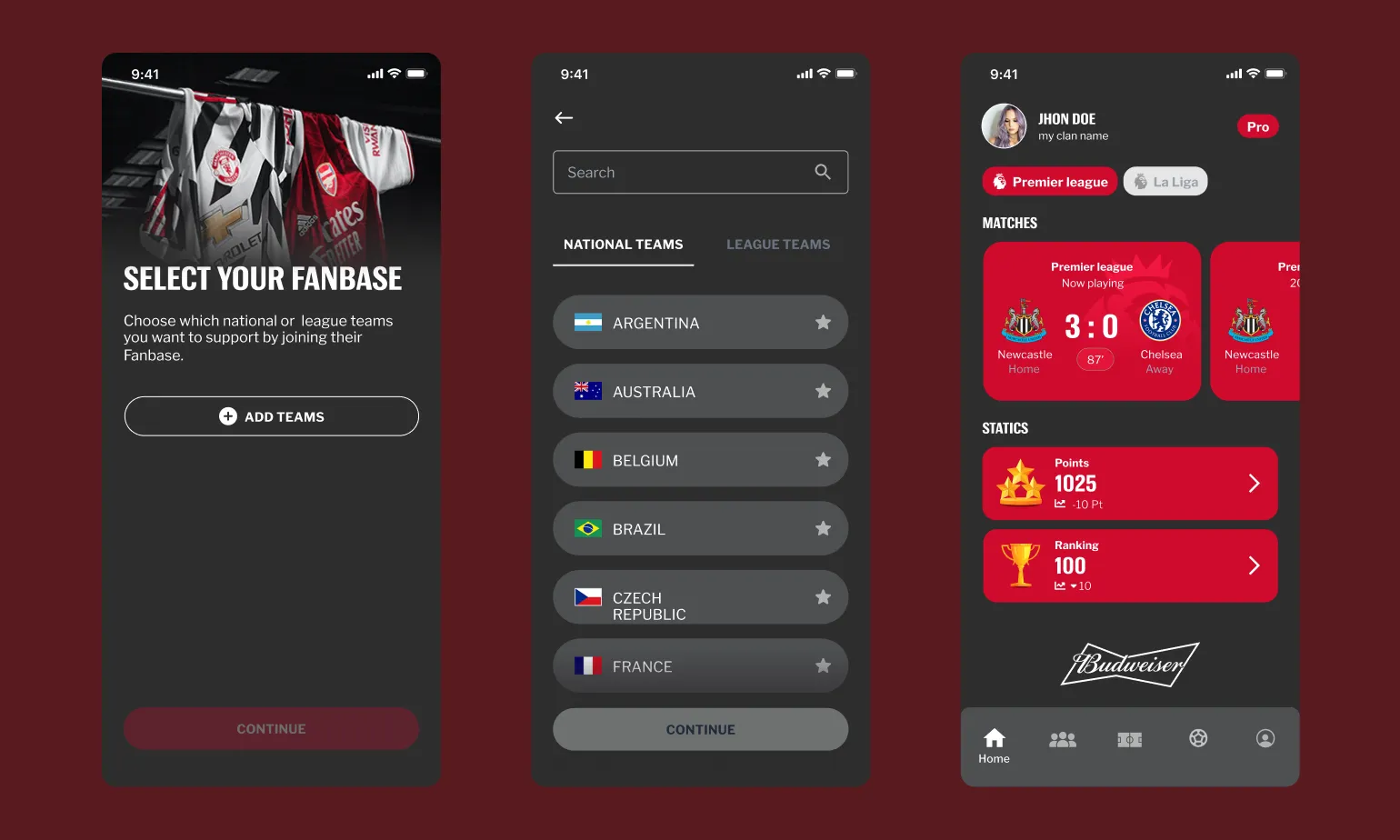
- A simple, repeatable core loop: choose a team → play → earn points → progress → redeem or compete.
- MVP feature prioritization: first the habit-forming layer of gameplay, points, and progress; then chat and watch parties as a community layer.
- An information architecture that clearly separated games and challenges, progress, points and rewards, and community events such as watch parties.
- A component system (UI kit) that maintained consistency, accelerated iteration, and allowed mini-games to grow without redesigning the entire experience.
Solution
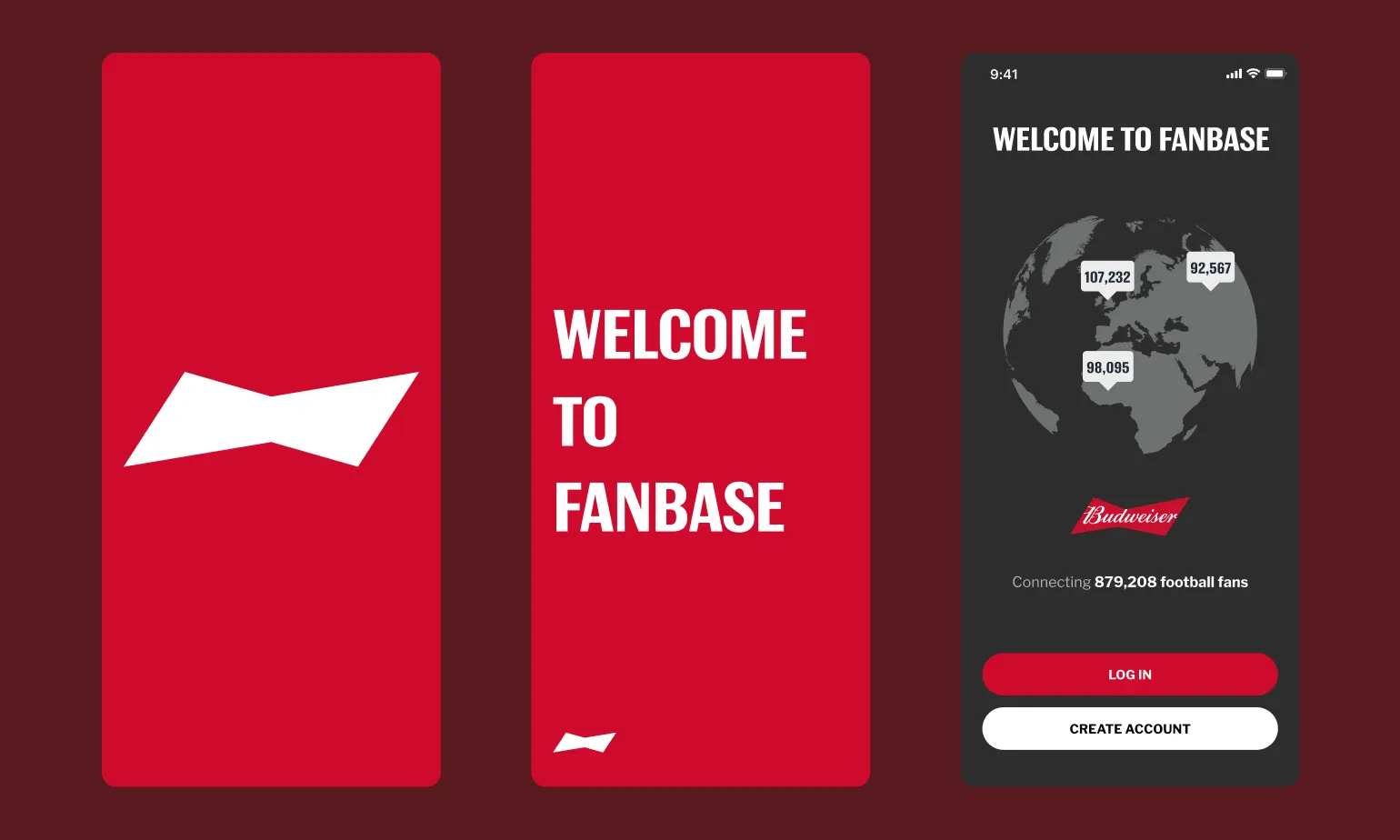
The final product connected fans with the brand and each other, using gamification to build an active community. The platform rested on three pillars:
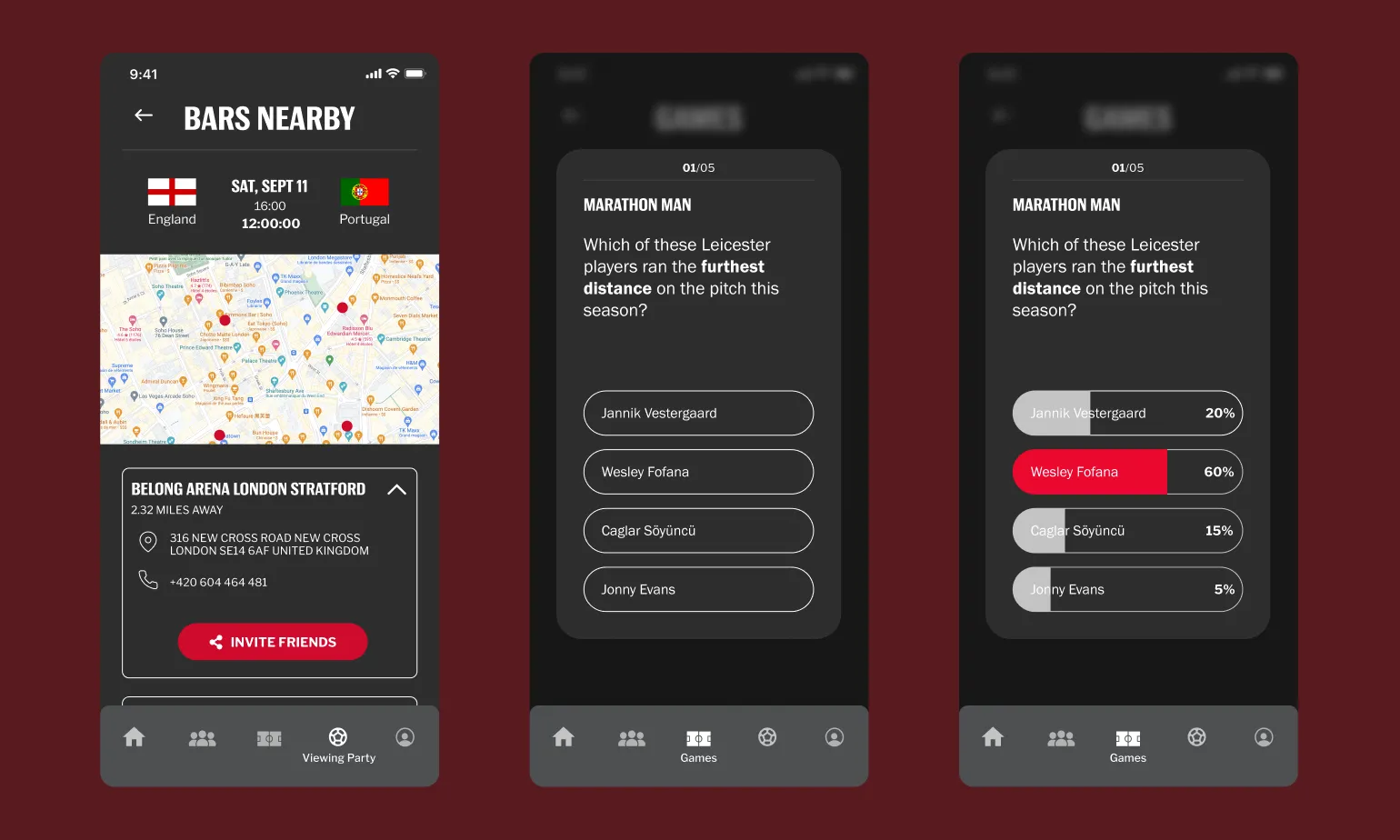
- Play and competition: varied mini-games that sustained daily and weekly participation.
- Progression and rewards: points and rankings that encouraged repeat play.
- Community and events: watch parties, chat, and social dynamics in bars and restaurants during matches.
Impact
Adoption and activation
Onboarding completion rate: 62% (users who complete onboarding and choose a team).
Activation rate: 35% (first mini-game completed in the first 24h).
Engagement (core loop)
Mini-games per active user/day: 1.6 (median ~1; power users lift the average).
Sessions per active user/day: 1.4.
Average session duration: 3m 40s (short mini-games + checking points/rewards).
Retention
D1 retention: 24%.
D7 retention: 9%.
D30 retention: 3%.
"Match-day" effect
On match days, active users complete +30% more mini-games vs. non-match days.
The 2-3-hour window around a match accounts for ~45% of daily activity.
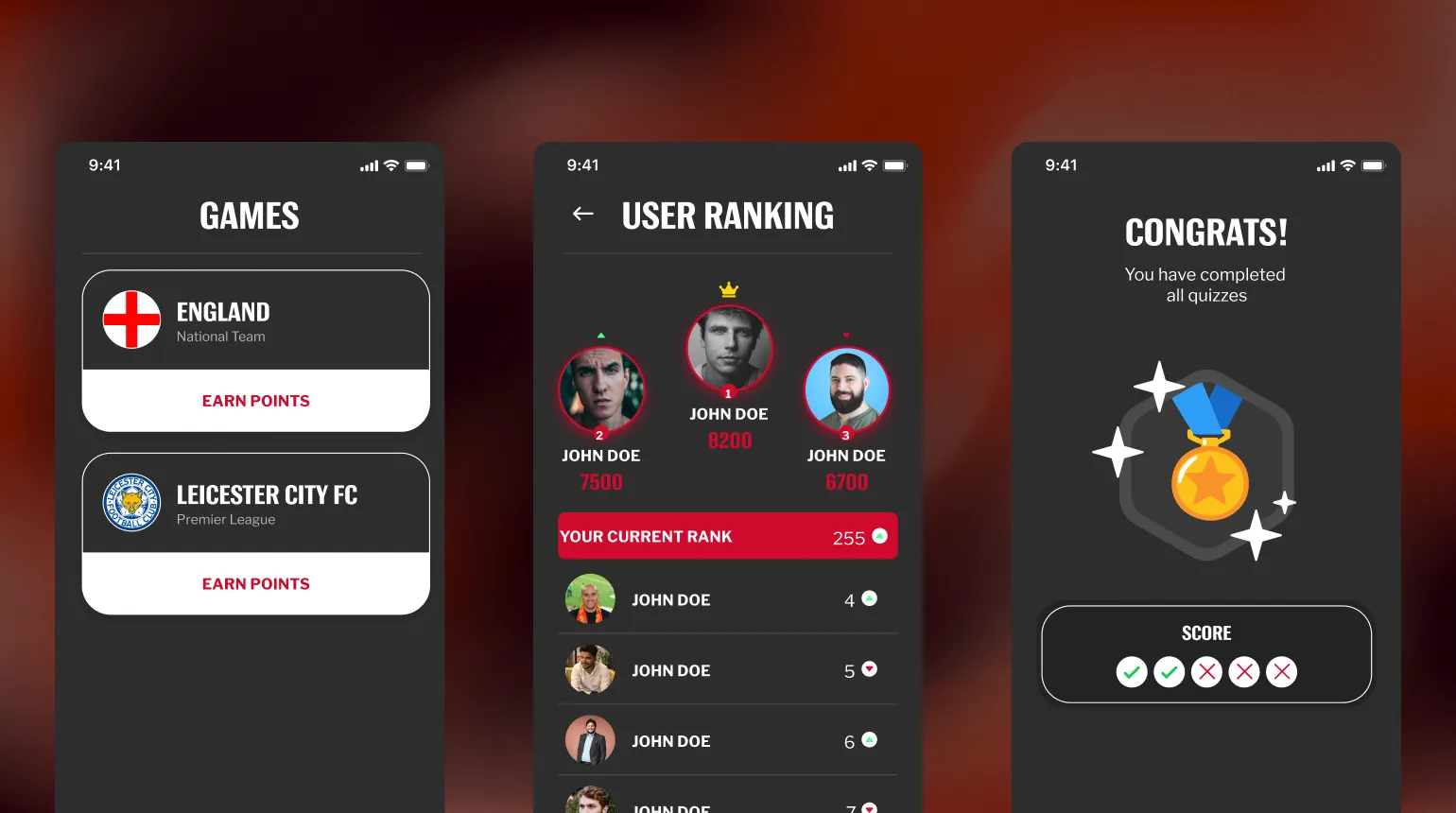
The project exceeded initial expectations. By driving sustained participation, encouraging user interaction, and extending the experience beyond the digital environment, Fanbase App was recognized by Budweiser as the app of the year, an award for the product with the highest engagement in its ecosystem.